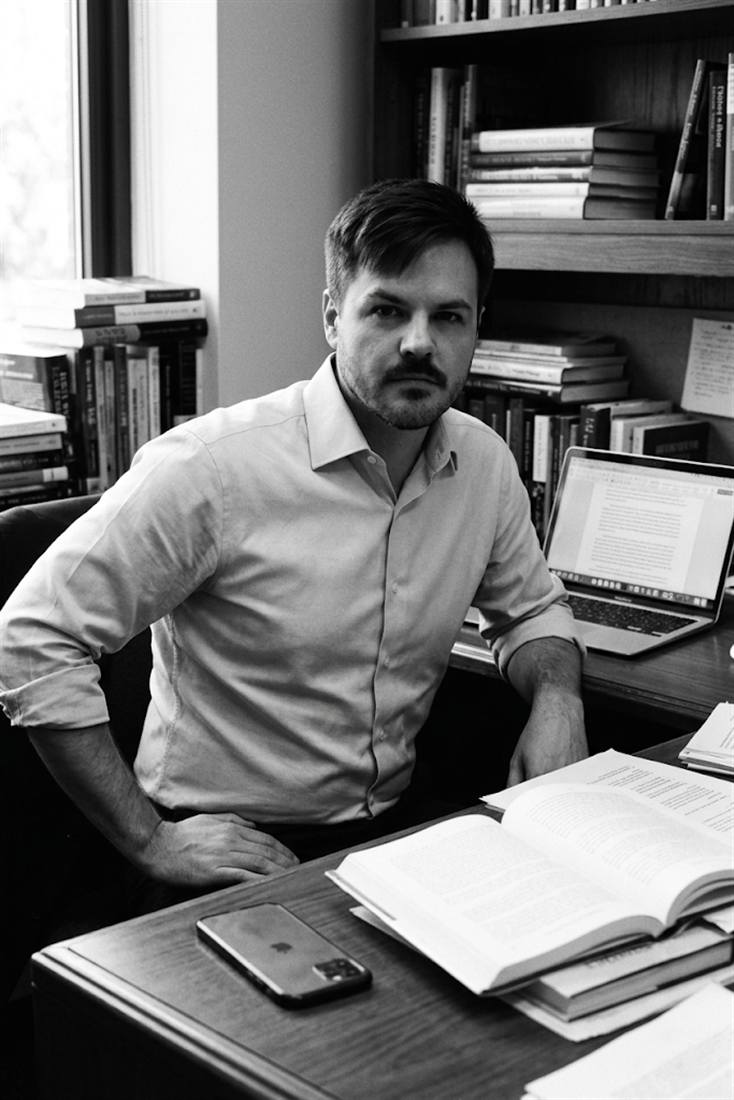
Writing about the shadows we try to outrun.
Dakota Mars grew up in the American Midwest, the younger of two children in a household where the television stayed off after dark and the bookshelves were always overflowing. His father worked nights. His mother read everything she could get her hands on, and left the books in piles around the house like small monuments to the places she had traveled without leaving.
He spent fifteen years in jobs that took him to the edges of things — emergency services, investigative work, a brief and uncelebrated stint as a hospital chaplain's aide — before he started writing fiction in earnest. Those years left a residue he has never entirely shaken. His debut novel, Once a Hero, came out of a decade of notes about the men he had met who were still living inside moments that had ended long ago. The books that followed explored adjacent territory: the spaces where people try to outrun their own damage, and find it waiting on the other side.
"I write about people standing at the edge of becoming worse — and the small, impossible choices that determine which way they fall."
His work spans crime fiction, dark literary drama, gothic horror, and science fiction, though Mars resists the idea that these are separate territories. To him, they are all the same room with different lighting. What he is always after is the same thing: the moment a person discovers who they actually are — as opposed to who they had been telling themselves they were.
Bright Eyes drew on his years working alongside families in crisis. Residual grew from a years-long fixation on identity and what it means to arrive somewhere — in a place, in a life, in a version of yourself — and wonder whether the journey changed something essential. The Room Above the Hall was the hardest to write and the one he is most proud of.
Mars writes mostly at night. He lives in a mid-sized city he declines to name publicly, with a dog of uncertain temperament and a reading chair he has owned for eleven years and has no intention of replacing. He is currently working on his fifth novel.